
 Image 1 of 2
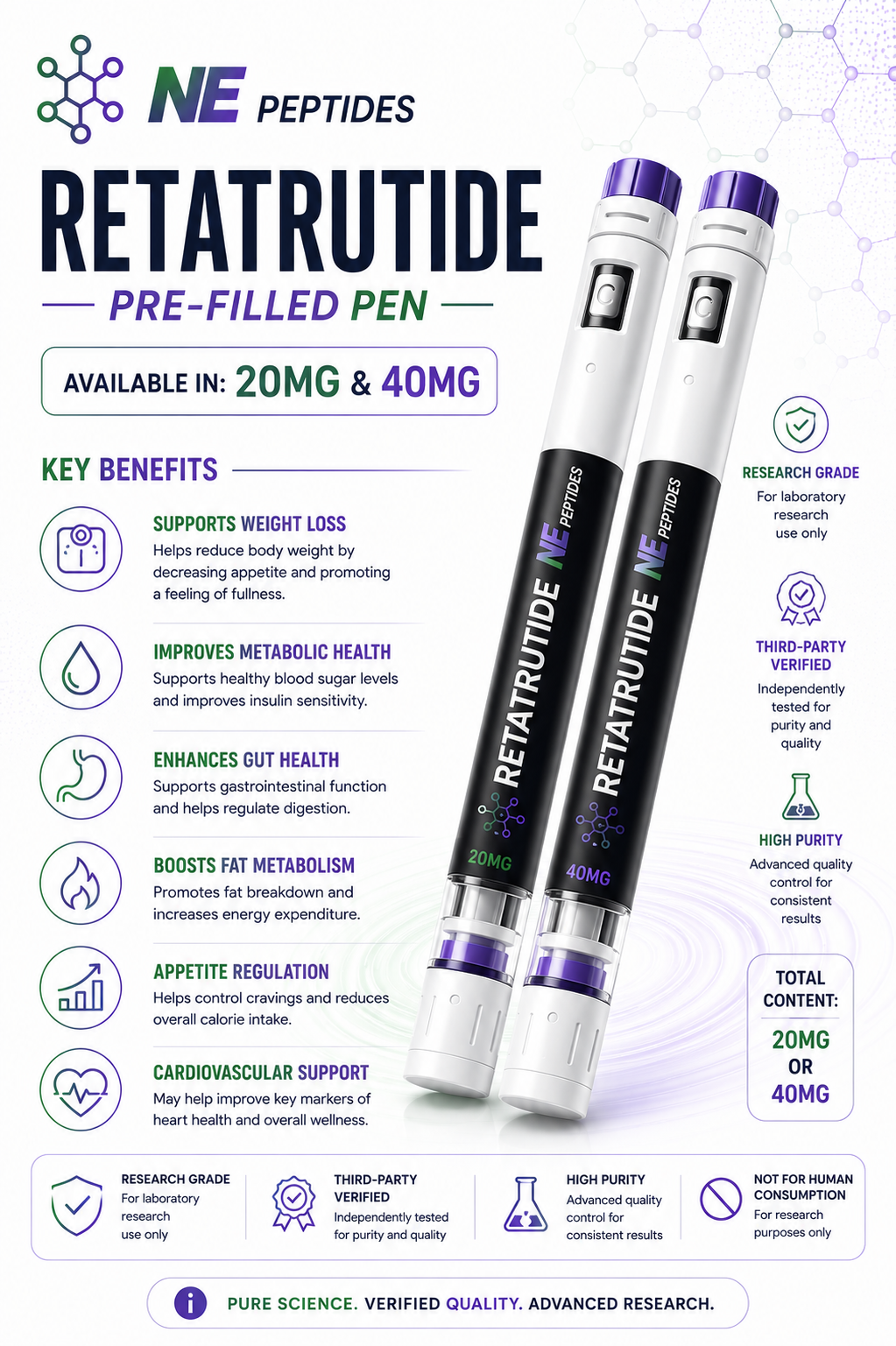 Image 2 of 2
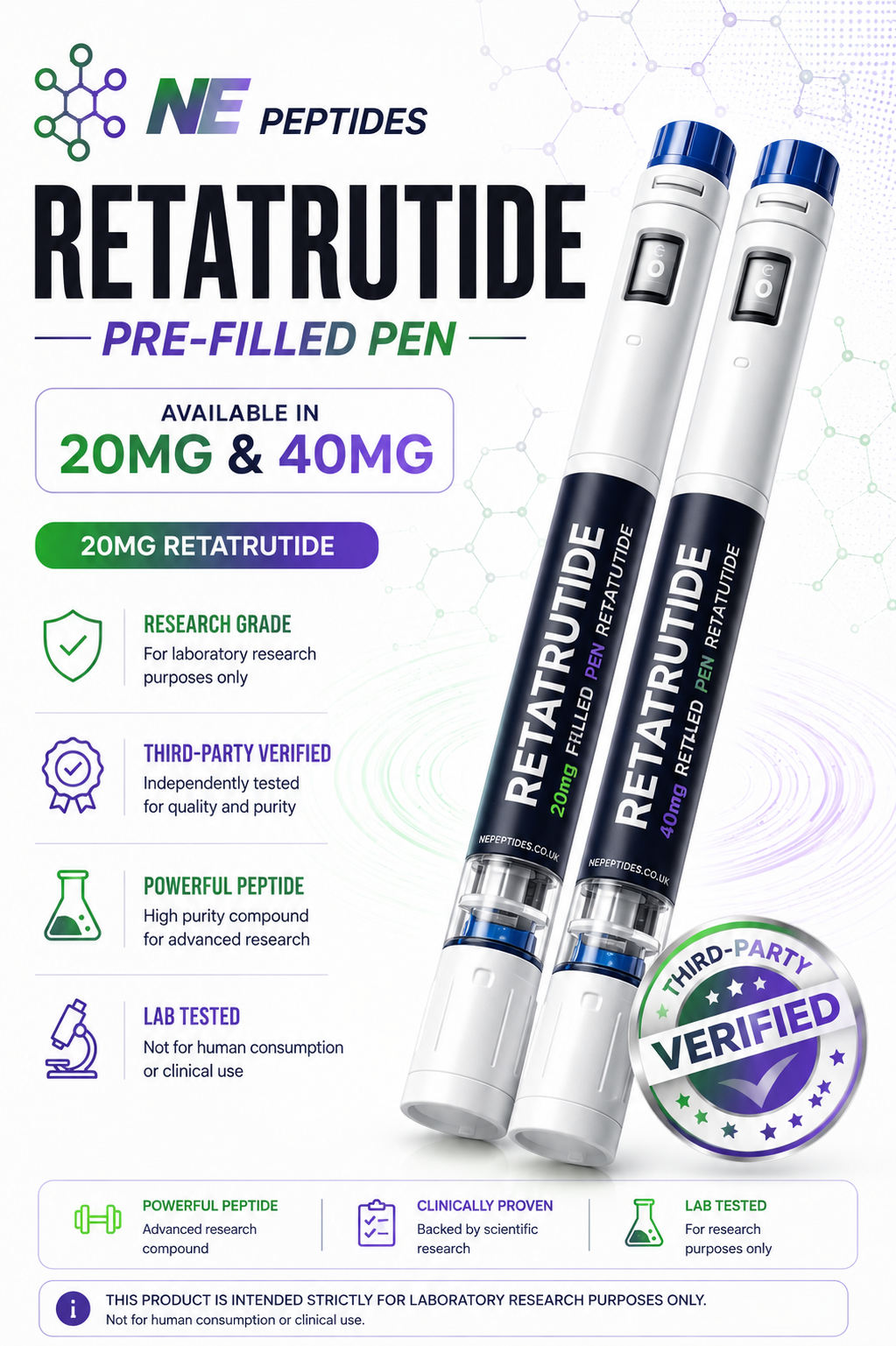
Retatrutide — a next-generation peptide tool for metabolic change
retatrutide, a novel triple-receptor agonist that activates GLP-1, GIP, and glucagon receptors. Engineered for potent, multi-pathway modulation of energy balance, glucose homeostasis, and weight regulation, retatrutide enables researchers to probe combined incretin and glucagon signaling with a single, well-characterized molecule.
Key research advantages
Mechanistic breadth: Simultaneous activation of GLP-1, GIP, and glucagon receptors allows study of integrated effects on appetite regulation, energy expenditure, hepatic metabolism, and insulin sensitivity — revealing interactions not accessible with single-receptor ligands.
Robust pharmacology: Retatrutide has demonstrated strong, dose-dependent effects on body weight and glycemic control in preclinical and early clinical evaluations, making it a reliable probe for dose–response and mechanism-of-action studies.
Translational relevance: Early human data indicate predictable metabolic responses, supporting translational studies from animal models to clinical hypotheses and biomarker development.
Experimental versatility: Suitable for acute and chronic dosing paradigms to examine short-term signaling events, inter-organ crosstalk, or long-term adaptations in adipose tissue, liver, pancreas, and central nervous system circuits.
Biomarker and pathway discovery: Use retatrutide to identify downstream molecular signatures (transcriptomic, proteomic, metabolomic), signaling cascades, and potential combination targets for future therapeutic strategies.
Suggested research applications
Comparative pharmacology: Contrast single- and dual-agonists with retatrutide to deconvolute receptor-specific versus synergistic effects on appetite, body weight, and glucose regulation.
Mechanisms of weight loss: Dissect contributions of reduced food intake versus increased energy expenditure and tissue-specific substrate utilization.
Hepatic metabolism and NAFLD/NASH models: Investigate direct and indirect effects on hepatic lipid handling, inflammation, and fibrosis pathways.
Islet biology and insulin dynamics: Examine effects on beta-cell function, insulin secretion dynamics, and incretin sensitivity.
Central nervous system effects: Map hypothalamic and reward-circuit responses to combined incretin/glucagon signaling.
Biomarker discovery for clinical translation: Identify peripheral and central biomarkers predictive of response or adverse effects.
Practical considerations for researchers
Dosing and formulation: Establish dose-ranging studies to define receptor occupancy windows and separate central versus peripheral effects. Use appropriate vehicle and stability controls for peptide handling.
Species selection: Consider interspecies differences in receptor pharmacology when designing translational experiments; include nonrodent models where receptor homology supports translation.
Safety and tolerability endpoints: Monitor cardiovascular, hepatic, and metabolic safety markers in chronic studies given glucagon receptor activity.
Combination studies: Evaluate interactions with lifestyle interventions, existing antidiabetic agents, or targeted modulators of energy balance.
Analytical endpoints: Integrate metabolic phenotyping (indirect calorimetry, body composition), molecular assays, and imaging to capture multidimensional effects.
Available for research purposes
Not for human consumption
Retatrutide — a next-generation peptide tool for metabolic change
retatrutide, a novel triple-receptor agonist that activates GLP-1, GIP, and glucagon receptors. Engineered for potent, multi-pathway modulation of energy balance, glucose homeostasis, and weight regulation, retatrutide enables researchers to probe combined incretin and glucagon signaling with a single, well-characterized molecule.
Key research advantages
Mechanistic breadth: Simultaneous activation of GLP-1, GIP, and glucagon receptors allows study of integrated effects on appetite regulation, energy expenditure, hepatic metabolism, and insulin sensitivity — revealing interactions not accessible with single-receptor ligands.
Robust pharmacology: Retatrutide has demonstrated strong, dose-dependent effects on body weight and glycemic control in preclinical and early clinical evaluations, making it a reliable probe for dose–response and mechanism-of-action studies.
Translational relevance: Early human data indicate predictable metabolic responses, supporting translational studies from animal models to clinical hypotheses and biomarker development.
Experimental versatility: Suitable for acute and chronic dosing paradigms to examine short-term signaling events, inter-organ crosstalk, or long-term adaptations in adipose tissue, liver, pancreas, and central nervous system circuits.
Biomarker and pathway discovery: Use retatrutide to identify downstream molecular signatures (transcriptomic, proteomic, metabolomic), signaling cascades, and potential combination targets for future therapeutic strategies.
Suggested research applications
Comparative pharmacology: Contrast single- and dual-agonists with retatrutide to deconvolute receptor-specific versus synergistic effects on appetite, body weight, and glucose regulation.
Mechanisms of weight loss: Dissect contributions of reduced food intake versus increased energy expenditure and tissue-specific substrate utilization.
Hepatic metabolism and NAFLD/NASH models: Investigate direct and indirect effects on hepatic lipid handling, inflammation, and fibrosis pathways.
Islet biology and insulin dynamics: Examine effects on beta-cell function, insulin secretion dynamics, and incretin sensitivity.
Central nervous system effects: Map hypothalamic and reward-circuit responses to combined incretin/glucagon signaling.
Biomarker discovery for clinical translation: Identify peripheral and central biomarkers predictive of response or adverse effects.
Practical considerations for researchers
Dosing and formulation: Establish dose-ranging studies to define receptor occupancy windows and separate central versus peripheral effects. Use appropriate vehicle and stability controls for peptide handling.
Species selection: Consider interspecies differences in receptor pharmacology when designing translational experiments; include nonrodent models where receptor homology supports translation.
Safety and tolerability endpoints: Monitor cardiovascular, hepatic, and metabolic safety markers in chronic studies given glucagon receptor activity.
Combination studies: Evaluate interactions with lifestyle interventions, existing antidiabetic agents, or targeted modulators of energy balance.
Analytical endpoints: Integrate metabolic phenotyping (indirect calorimetry, body composition), molecular assays, and imaging to capture multidimensional effects.
Available for research purposes
Not for human consumption